#multi-agent

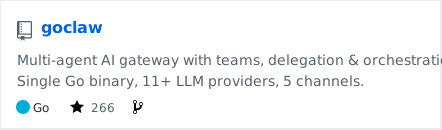
I learned agentic AI concepts in Python - agent loops, tool calling, multi-agent coordination, production patterns. Python works well for most of these cases. But when it comes to running an AI agent chat application at production scale - many users, real-time streaming, concurrent sessions - Go turns out to be a more appropriate choice. This post breaks down why, using GoClaw as a concrete example.

GoClaw

Read More

This post brings together everything we’ve learned about applying agentic AI to financial services. From role-based prompting through multi-agent coordination, we’ve covered the complete spectrum of techniques for building intelligent financial systems. Here’s the comprehensive overview with production patterns.

Read More

When multiple agents operate simultaneously on trading operations, they must share a consistent understanding of the world state. This post explores the coordination patterns that make multi-agent trading systems reliable: persistent state management, conflict resolution, and multi-agent RAG for comprehensive analysis.

Read More

When building an AI hedge fund, the most critical element is understanding the flow of agent-to-agent communication. Does one agent need to work after another? Can agents work in parallel? What is the specific purpose of each agent? Multi-agent architecture answers these questions by defining specialized agents, shared state communication, orchestration patterns, and routing strategies that together create reliable, intelligent trading systems.

Read More

When financial workflows become too complex for simple parallel processing or chaining, the orchestrator-worker pattern provides dynamic coordination. Unlike fixed workflows, an orchestrator analyzes problems at runtime, breaks them into subtasks, and delegates work to specialized agents. This is the pattern that ties together everything we’ve learned - bringing intelligent coordination to financial operations.

Read More

Moving from individual prompts to production systems requires thinking architecturally. Financial workflows aren’t just chains of prompts - they’re coordinated systems where multiple specialized agents work together. Understanding how to model these workflows is essential for building reliable, maintainable financial AI systems.

Read More

Over the past few months, I’ve been exploring the world of agentic AI - systems where language models don’t just generate text, but reason, plan, and take action. This post serves as both an introduction and a roadmap to the complete series, sharing my thoughts on the key concepts, practical patterns, and how to get started building your own intelligent agents.

Read More

Your browser is out-of-date!

Update your browser to view this website correctly. Update my browser now

×